
Factory Diamonds vs Aftermarket: What Every Watch Buyer Should Know
When it comes to diamond-set watches, not all stones — or settings — are created equal. For many luxury buyers, particularly those considering high-end brands like Patek Philippe, Rolex, Audemars Piguet, Cartier, and Omega, understanding the difference between factory diamonds and aftermarket diamonds is essential.
This guide will walk you through what each option means, why factory diamonds are often preferred, and when aftermarket choices might still make sense.
What Are Factory Diamonds?
Factory diamonds are stones set into a watch at the time of manufacture, by the brand itself. In watches from top maisons like Patek Philippe or Rolex, these diamonds are:
Selected and graded by the brand’s gemologists for color, clarity, and cut quality.
Set to exacting specifications that maintain the structural integrity and design language of the watch.
Included in the watch’s original design and reference documentation. (Kloira Inc.)
Factory diamonds are virtually part of the official blueprint — meaning the watch was engineered around them, not altered to accommodate them later.
Why Factory Diamonds Are Preferred
Authenticity & Provenance
Owned and set by the manufacturer themselves, factory diamonds preserve original authenticity — a key factor in resale and collector value. (Kings N Queens)Value Retention & Investment Potential
Factory diamond watches — especially from icons like Patek Philippe — have a better track record of holding or even appreciating in value over time. Collectors place a premium on unmodified originals because their provenance remains intact. (Kings N Queens)Craftsmanship & Design Integrity
When a watch is designed with diamonds in mind, every aspect of weight distribution, durability, and finishing is considered. That’s why factory diamond watches are often viewed as artworks as well as instruments. (Kings N Queens)Warranty & Servicing
Factory-set diamond watches retain their manufacturer warranty and can be serviced at authorized centers without complication. (Kloira Inc.)
What Are Aftermarket Diamonds?
Aftermarket diamonds are stones that are added after a watch leaves the brand’s production — typically by independent jewelers. These can range from tasteful enhancements to extreme “iced-out” customization.
Buyers choose aftermarket options for several reasons:
Customization & Personal Style — You can create looks not offered by the brand’s catalog. (Kloira Inc.)
Lower Entry Price — Adding diamonds later can cost less up front than buying a factory diamond model. (SwissWatchExpo)
However, these come with trade-offs that buyers must understand.
Comparing Factory Diamonds vs Aftermarket
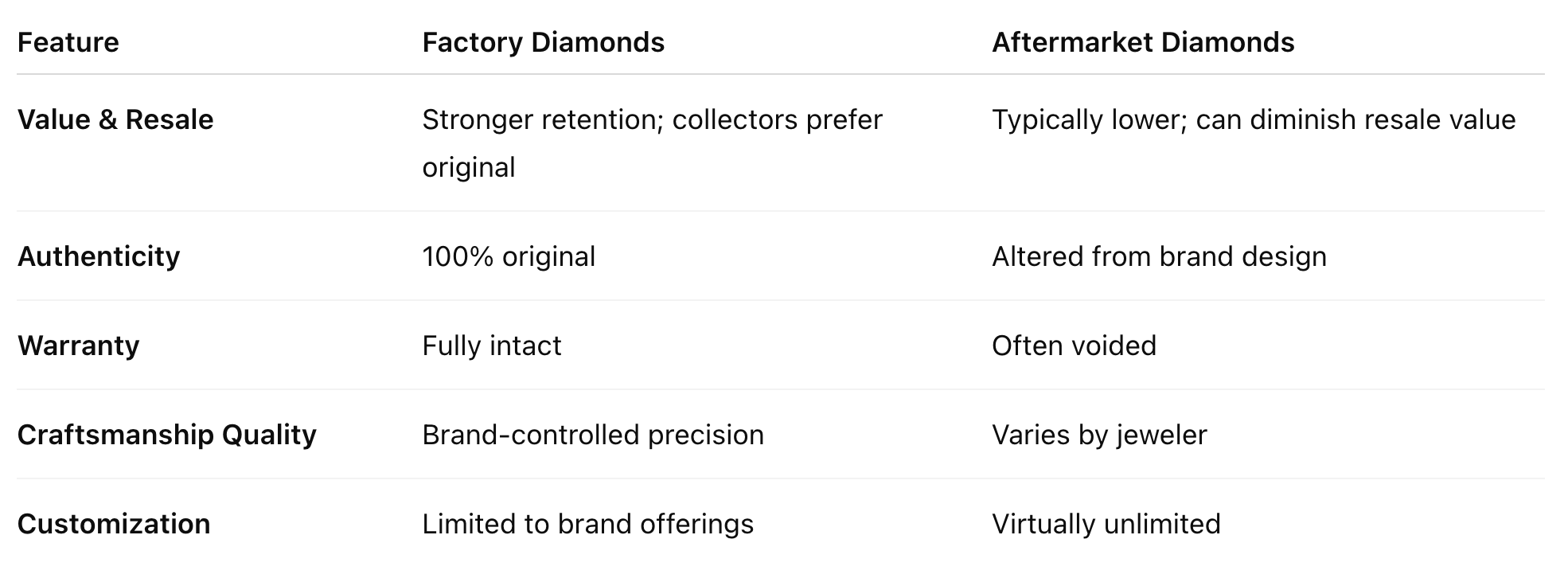
Factory diamonds generally maintain value and prestige because they preserve authenticity, original design integrity, and warranty coverage — all factors that collectors and investors care about deeply. (Kings N Queens)
Aftermarket diamonds, while eye-catching and customizable, can reduce a watch’s appeal in the secondary market and may complicate future servicing. (Watch My Diamonds)
Pros of Factory Diamonds (Why They’re Preferred)
✔️ Superior Quality & Grading – Brands use finely matched stones with consistent cut, color, and clarity. (Kloira Inc.)
✔️ Higher Long-Term Value – Factory diamond watches tend to retain or even appreciate, especially limited-edition references. (Kings N Queens)
✔️ Authenticity Assurance – Original box, papers, and diamond documentation support resale. (Kings N Queens)
✔️ Serviceability – Authorized dealer servicing remains available even decades later. (Kloira Inc.)
Pros of Aftermarket Diamonds (Why Some Buyers Still Choose Them)
While factory diamonds lead in value and heritage, aftermarket options offer:
Personal Expression & Style Customization – Unique patterns or fully iced-out looks not offered by the brand. (Kloira Inc.)
Lower Upfront Cost – Full diamond bezels or pavé bracelets may cost less than equivalent factory diamond models. (SwissWatchExpo)
More Design Freedom – Choose stone types, colors, and layouts beyond factory offerings. (Kloira Inc.)
Some buyers prioritize visual impact and individuality over resale value — especially if their goal is wearing the watch for personal style, not investing in it.
Buyer Tips: What to Look For
Whether you're considering a factory or aftermarket diamond piece, here are essential checks:
Documentation – Factory diamonds should be documented in box and papers, and ideally have diamond grading. (Kings N Queens)
Visual Inspection – Uniform cut, consistent alignment, and matching stones indicate a higher quality original set. (Beloved Watch)
Service History – Originals maintain brand service records; aftermarket watches may not be accepted by authorized centers. (SwissWatchExpo)
Price vs Value – If a factory diamond watch looks “too cheap,” it might be overshadowed by aftermarket stones — ask questions. (Diamond Source NYC)
Choosing What’s Right for You
At the end of the day, the better choice isn’t about what’s “right” on paper — it’s about how you plan to wear the watch and why you’re buying it.
For collectors and investors, factory-set diamond watches from brands like Patek Philippe, Rolex, Audemars Piguet, Cartier, and Omega remain the gold standard. Their authenticity, craftsmanship, and resale resilience consistently make them the preferred choice for long-term value, a point widely echoed across the secondary luxury market.
That said, aftermarket diamonds aren’t automatically the wrong choice. For buyers driven by personal style rather than investment, aftermarket customization can offer standout visual impact and design freedom at a lower entry cost. Just keep in mind that this type of customization typically doesn’t translate into strong resale performance.
What matters most is clarity and transparency. Knowing whether a watch carries factory or aftermarket diamonds allows you to price it correctly, service it properly, and enjoy it for what it truly is — without surprises later on.
At Wristlux Manila, we don’t push one option over the other. Our role is to make sure you understand the difference, align the watch with your goals, and buy with confidence.