
Audemars Piguet Royal Oak 14790ST vs 15300ST — Which Royal Oak Is Right for the Serious Collector?
Among Royal Oak collectors, few debates are as enduring — or as nuanced — as 14790ST vs 15300ST. Both are discontinued, both are highly collectible, and both represent pivotal eras in Audemars Piguet’s Royal Oak evolution. Yet they speak to very different types of collectors.
This comparison breaks down heritage, proportions, movements, and long-term collectability to help you decide which reference truly belongs in your collection.
1. Case Size & Wrist Presence

Audemars Piguet Royal Oak 14790ST
The Neo-Vintage 36mm Royal Oak
Royal Oak 14790ST
Case size: 36mm
Era: Early 1990s–2000s
Profile: Slim, understated, neo-vintage
The 14790ST stays closest to the original Gérald Genta proportions. It wears elegantly, slips effortlessly under cuffs, and appeals strongly to collectors who favor classic sizing or vintage aesthetics.
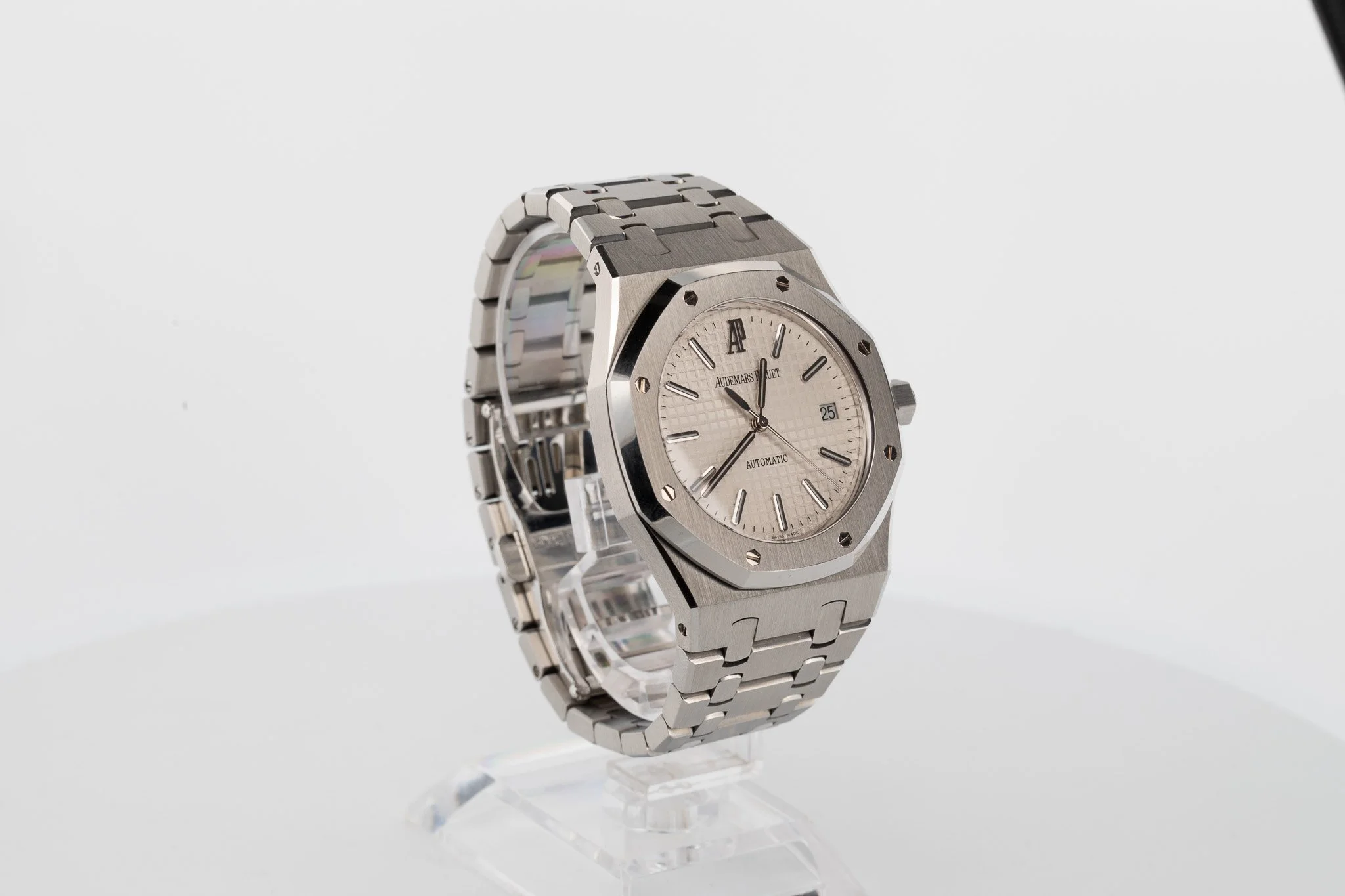
Audemars Piguet Royal Oak 15300ST
39mm Icon for Modern Collectors
Royal Oak 15300ST
Case size: 39mm
Era: Mid-2000s
Profile: Sportier, more contemporary
The 15300ST introduced the Royal Oak to a more modern audience. Its 39mm case delivers stronger wrist presence without venturing into oversized territory, making it ideal for daily wear.
Verdict:
• Prefer classic elegance and vintage proportions → 14790ST
• Want modern balance and versatility → 15300ST
2. Dial & Design Language
14790ST
Dial: Petite Tapisserie
Look: Finer texture, softer reflections
Aesthetic: Traditional Royal Oak purity
The Petite Tapisserie dial feels more refined and understated — a detail that seasoned collectors immediately recognize.
15300ST
Dial: Grande Tapisserie
Look: Bolder texture, stronger contrast
Aesthetic: Modern Royal Oak identity
The larger tapisserie pattern gives the 15300ST a sportier, more contemporary feel.
Verdict:
• Vintage-leaning collectors → 14790ST
• Modern sports-luxury fans → 15300ST
3. Movement & Horological Philosophy
14790ST — Caliber 2225
Based on JLC 889 ébauche
Slim, reliable, traditional
Closed caseback
Collectors value the 2225 for its thinness and classic construction, aligning with the vintage Royal Oak ethos.
15300ST — Caliber 3120
Fully in-house AP movement
Larger balance, improved power reserve (~60 hours)
Sapphire exhibition caseback
The 3120 marks Audemars Piguet’s shift toward modern, in-house engineering and visual movement appreciation.
Verdict:
• Movement purists & neo-vintage lovers → 14790ST
• Technical, modern collectors → 15300ST
4. Collectability & Market Appeal
14790ST
True neo-vintage Royal Oak
Finite supply, fewer clean complete sets
Increasing demand as case sizes trend smaller
15300ST
Discontinued but more recent
Often viewed as the best “one-watch Royal Oak”
Strong global liquidity and resale demand
Verdict:
• Long-term, low-key rarity → 14790ST
• Strong daily wear + market confidence → 15300ST
5. Which One Should You Buy?
Choose the 14790ST if you:
Appreciate Gérald Genta’s original proportions
Prefer understated luxury
Collect neo-vintage icons
Want a Royal Oak that feels quietly special
Choose the 15300ST if you:
Want a modern yet discontinued Royal Oak
Prefer stronger wrist presence
Value in-house movements
Need a versatile daily luxury sports watch
Collector’s Closing Perspective
Neither watch is “better” — they simply represent different chapters of the Royal Oak story.
The 14790ST is about heritage, restraint, and timeless proportions
The 15300ST is about modern refinement, engineering, and everyday versatility
For many serious collectors, the ultimate goal isn’t choosing one — it’s eventually owning both.